Friday, February 19, 2016
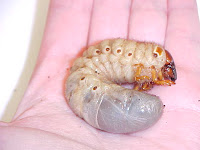
Ox beetles
Friday, February 5, 2016
Zika virus
I thought I would jump on the band wagon and get some information out about Zika virus. This seems to be the latest and (not the) greatest in the news as of late. Considering that the first case of local transmission was detected within Texas in the past week, everyone needs to know about this so they can take proper precautions.
Zika virus is transmitted by Aedes mosquitoes. Currently, there is no specific treatment for the virus, nor is there a vaccine. The best way to avoid getting Zika virus is to avoid being bitten by infected mosquitoes. Zika virus can be contracted through the bite of an infected mosquito, through blood transfusions, through sexual contact, and from mother to child during pregnancy.
While the incubation period of Zika virus is unknown, it is thought to be from a few days to a week long. Symptoms include fever, skin rash, conjunctivitis, muscle and joint pain, and headache. Symptoms tend to be mild and last from 2-7 days. About 20% of people with Zika virus actually get ill from the virus and severe disease that requires hospitalization is uncommon. Death due to the virus is rare.
The Aedes mosquitoes that transmit Zika virus are also able to transmit dengue and Chikungunya viruses. These mosquitoes are daytime biters, but can also bite at night. Aedes mosquitoes tend to lay their eggs near or in standing water, so reducing these sources can be a way to reduce mosquito populations near your home. More information on reducing sources here.
To protect yourself from mosquito bites, wear light colored clothing that covers as much skin as possible, use insect repellent (read and follow label instructions), use screening on doors and windows, reduce standing water, and if sleeping outside, use mosquito netting.
For more information on Zika virus, please see the CDC website here:
http://www.cdc.gov/zika/index.html
Monday, January 25, 2016
Boxelder bugs
During the winter (if you can call the weather we're having in Texas winter....), people may have the opportunity to see boxelder bugs emerge out of their overwintering sites on warm, sunny days. As they can show up all of a sudden in somewhat large numbers, it can be startling.
Boxelder bugs are dark brownish-black insects with reddish-orange markings around the edges of the thorax and wings. The bugs are about 1/2 an inch long as an adult. Nymphs, or immatures, look similar to adults but are smaller and lack fully developed wings. Since the wings are not fully developed on immature stages, the red abdomen shows through.
While boxelder bugs typically do not cause damage to the landscape or structure, they may become a nuisance in and around homes from fall until spring. In the fall, adults and nymphs may gather in large numbers to move to overwintering areas. Boxelder bugs spend the winter in cracks and crevices in walls, around door and window casings, tree holes and in debris on the ground. Sometimes they will try to move indoors to overwinter. On warm days from fall until spring, boxelder bugs emerge from their overwintering location to warm themselves in the sun.
Boxelder bugs feed primarily on the seed pods of female boxelder trees, but occasionally feed on other trees such as plum, cherry, apple, ash and maple. The insects pierce plant tissue with their mouthparts and suck juice from the plant. Even though the insects feed on plant juices, they usually do not cause damage to the tree.
Removing female boxelder trees from the area may solve problems with large, repeated infestation of boxelder bugs. Hiding places can also be reduced or eliminated by removing debris such as boards, leaves and rocks from the area as well as sealing cracks and crevices around the home with sealant. If chemical treatment is desired, treat overwintering areas with chemicals containing active ingredients such as pyrethrins, cyfluthrin, bifenthrin, carbaryl or acephate.