Showing posts with label mosquitoes. Show all posts

Friday, October 5, 2018

Rain and mosquitoes

With all of the rain that we have received lately and more on the way, it's understandable for people to be concerned about mosquitoes.  I'm not going to rehash everything here in this post, but I will direct you to past posts on mosquito topics.

mosquito
I do want to let people know of floodwater mosquitoes which are different from our normal culprits.  I usually get the statement of the "huge mosquito" or a "mosquito that REALLY hurts when it bites" or a "mosquito that tried to carry them away".  These are the floodwater mosquitoes that come out after we have heavy rains.  These mosquitoes lay their eggs in areas that water will reach during flooding conditions (or heavy rainfall).  Fortunately, they can also be repelled with mosquito repellent.  The EPA has a site that can help you choose a mosquito repellent here.

As for other mosquito information, remember the following:
  1. Stay indoors during peak mosquito hours*- dawn & dusk
    1. *please note that some Aedes mosquitoes are day time feeders while some Culex are night time feeders in addition to being active at dusk and dawn, so precaution should be taken whenever outside
  2. Eliminate standing water
    1. Dispose of old tires or cover them with a tarp to keep off rain
    2. Clean out gutters and downspouts
    3. Bird baths, pet water dishes, etc. should be emptied and refilled twice a week
    4. Store containers so they do not hold water
  3. Keep grass mowed to a proper length & vegetation trimmed (mosquitoes like to rest in thick vegetation)
  4. Repair leaky faucets or A/C lines that produce condensate
  5. In permanent standing water areas, use things like mosquito fish or Bt israelensis (dunks)
  6. Keep window screens in good repair
  7. Use repellents when going outside (follow label instructions).
For mosquito & mosquito disease information see this page for more information:
http://urban-ipm.blogspot.com/2016/07/mosquito-and-mosquito-disease.html

For information about heartworms (transmitted to pets by mosquitoes) see this page:
http://urban-ipm.blogspot.com/2017/08/heartworms.html

Friday, June 16, 2017

Mid-year check on bug webinar series watching

Have you been tuning in the first Friday of each month to the All Bugs Good and Bad webinar series? If you have no idea what I'm writing about or you possibly missed one or more along the way, FEAR NOT....we've got you covered!

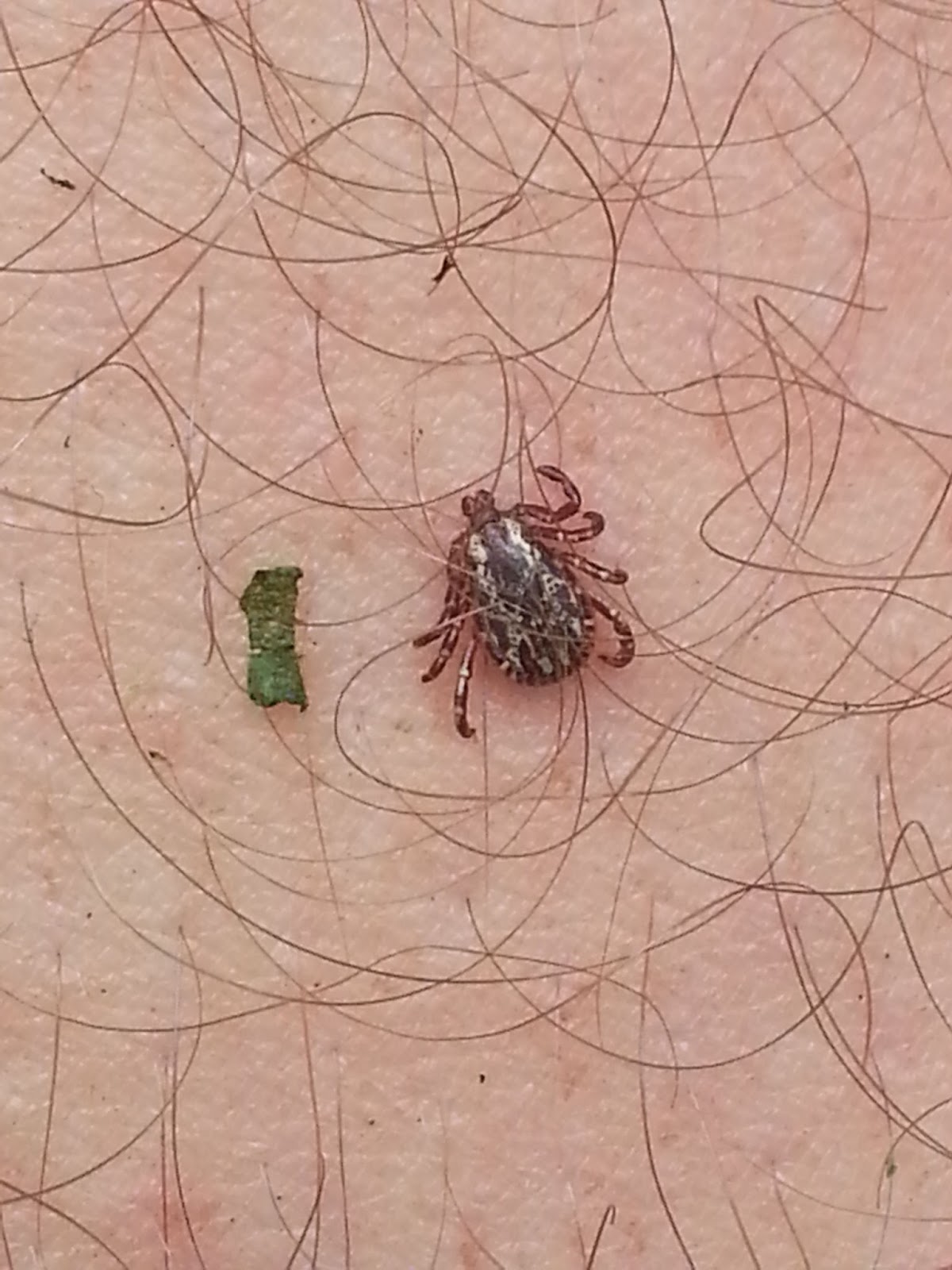
American dog tickEach webinar has been taped for your viewing convenience (yes, you can watch in your PJs at home if you want).  All you have to do is click on the link of the webinar you want to view below and then click the green circle with the white arrow button next to "watch recording" in the upper right corner of the webpage that pulls up.

Webinars that have been completed so far in 2017:

Don't Let Tramp Ants Take Over Your Home

Protect Your Veggie Harvest From Hungry Insects

Mosquitoes and Insect Borne Diseases

Ticks

Aphids, Scales and, Whiteflies

We also have more webinars scheduled for the rest of the year beginning August 4th with me talking about various flies.  Webinars are the first Friday of each month at 2 PM Eastern time (that's 1 PM here in Texas).

The rest of 2017's schedule:

Drain flies, house flies, and fungus gnats- August 4th

Meet our native pollinators- September 1st

New invasive ants to know about- October 6th

Pantry pests, carpet beetles, and clothes moths- November 3rd

Don't let bed bugs hamper your vacation plans- December 1st (this one is my hubby speaking!).

The 2017 Webinars are brought to you by the Ant Pests and Urban IPM eXtension Communities of Practice; and by the Alabama Cooperative Extension System, the University of Georgia ExtensionTexas A&M AgriLife Extension and Clemson Cooperative Extension.  Series Coordinators: Dani Carroll and Kathy Flanders, Auburn University.  Marketing: Amanda Tedrow, University of Georgia Extension.  Webinar Text Chat Moderators: Tim Davis, University of Georgia Extension, and Vicky Bertagnolli-Heller, Clemson Cooperative Extension.

Friday, August 19, 2016

Free Seminar on Zika virus & Mosquito Management

WHAT:
Information provided on Zika virus, mosquitoes and their management.

WHERE:
1600 Smith Road
Austin, TX 78721

WHEN:
Thursday, September 22nd
10AM– 12PM

Space is limited so reserve your spot soon!
512-854-9606
ebrown@ag.tamu.edu


Friday, July 22, 2016

Mosquito and mosquito disease information

I know there has been a LOT of talk and information about mosquitoes and diseases they transmit, but I want to gather a bunch of information (from reputable sources) for you to use in case you need it.  So instead of remaking the wheel here, I will be linking to other good sources of information for you to check out.

Mike Merchant's post on Zika virus & NEW PUBLICATIONS FOR TEXANS!

Mike Merchant's post on do-it-yourself thermal fogging for mosquitoes

AgriLife's Mosquitoes of Texas page

City of Austin Vector Control- "The Rodent and Vector Control program assists individual property owners with eradicating mosquitoes and rodents on their property."

Williamson County Mosquito Control District

Hays County Mosquito Surveillance

Texas Mosquito Control Association

TMCA's list of organized mosquito control districts in Texas

CDC information

Zika virus

Chikungunya

Dengue

West Nile Virus

Texas Department of State Health Services information

Zika virus

Chikungunya

Dengue

West Nile Virus


Friday, July 8, 2016

Hi! Remember me? West Nile Virus


With all the media attention on Zika lately, not many people are discussing (or are concerned with) West Nile Virus.  This disease is still around and may become a concern later this summer due to the hot, dry conditions we are currently experiencing in Central Texas.

Cases of West Nile Virus (WNV) are generally seen in summer and increase throughout summer and into fall.  According to the Centers for Disease Control, most people (70-80%) that become infected with WNV show no symptoms.  About 1 in 5 people develop a fever or other symptoms such as headache, body aches, vomiting or diarrhea; this is called West Nile fever.  Less than 1% of the people infected develop serious neurological illness such as encephalitis (inflammation/ swelling of the brain) or meningitis (inflammation/ swelling of the tissue that surrounds the brain and spinal cord); this is called West Nile neuroinvasive disease.

West Nile is generally transmitted by the bite of an infected mosquito.  Mosquitoes become carriers by feeding on infected birds and can then transmit the virus to other animals, including humans.  Multiple species of mosquitoes have been found carrying West Nile Virus, but it is predominately transmitted by Culex mosquitoes.  Unfortunately the Southern house mosquito, Culex quinquefasciatus, is fairly common here and is many times found coming into homes (hence it's common name).

WNV can also be transmitted through blood transfusions, transplants and mother to child via pregnancy or breastfeeding.  It is NOT spread through touching or kissing.
This unused and uncovered hot tub is a perfect mosquito habitat.
People over 50 are at a higher risk to get severe illness, so they should take care to avoid mosquito bites.  If someone spends a lot of time outdoors, they are more likely to be bitten and should pay attention while outside and try to avoid mosquito bites.
Tips for avoiding mosquito bites:

  1. Stay indoors during peak mosquito hours*- dawn & dusk
    1. *please note that some Aedes mosquitoes are day time feeders while some Culex are night time feeders in addition to being active at dusk and dawn, so precaution should be taken whenever outside
  2. Eliminate standing water
    1. Dispose of old tires or cover them with a tarp to keep off rain
    2. Clean out gutters and downspouts
    3. Bird baths, pet water dishes, etc. should be emptied and refilled twice a week
    4. Store containers so they do not hold water
  3. Keep grass mowed to a proper length & vegetation trimmed (mosquitoes like to rest in thick vegetation)
  4. Repair leaky faucets or A/C lines that produce condensate
  5. In permanent standing water areas, use things like mosquito fish or Bt israelensis (dunks)
  6. Keep window screens in good repair
  7. Use repellents when going outside (follow label instructions).
 For a map of West Nile cases in Texas click here. 


Monday, September 17, 2012

Midges- part two

I would like to expand upon my midge post from last week.  I received an email that suggested that I clarify some finer points of the label "midge" and I agree that it is a good idea.  While I tagged the post with Chironomid, I didn't mention it specifically in the blog post itself and I should have.  So come along for a taxonomy tour.

There are biting midges and non-biting midges.  Last week's post was about non-biting midges.  While all midges are in the order Diptera (which includes flies, mosquitoes and midges), the biting midges fall into the Ceratopogonidae family and the non-biting midges fall into the Chironomidae family (click on links to see images).

Ceratopogonids are called biting midges, but more often around here, no-see-ums.  No-see-ums can cause painful bites to people who spend time outdoors.  Bites may cause painful lesions for some.  Adults are gray and tiny (less than 1/8 an inch long) with long antennae and well-developed mouthparts.  Only the females take a blood meal.

It is also possible for Chironmid midges to get confused with the Culicidae family (which are the mosquitoes).  Both groups are delicate looking insects with slender bodies and long legs.  Both Chironomid and mosquito males have feathery antennae, so may look very similiar.  Mosquitoes have an elongated proboscis (mouthpart) and scales on the veins of their wings which helps to differentiate them from other insects in the order Diptera.

Hope that clarifies a bit more of what a midge may and may not be.  As always, if you ever have a question on identification of an insect, collect a sample and either send it to me or take it to your local Extension office.